
In the thrilling world of online casinos, one question looms large for every player: is the game fair? The allure of digital slots, poker, and roulette hinges on the promise of a level playing field, where luck and strategy determine the outcome, not manipulation. A fair online casino isn’t just desirable; it’s the bedrock of a positive and trustworthy gambling experience.
But how do these virtual establishments ensure fairness? The answer lies in a combination of sophisticated technology, rigorous regulation, and a commitment to transparency. From Random Number Generators (RNGs) that dictate unpredictable results to stringent oversight by gaming authorities, various mechanisms are in place to guarantee integrity.
This article pulls back the curtain, demystifying the methods online casinos employ to maintain fairness. It’s designed to equip you with the knowledge to distinguish legitimate platforms from potential scams, understand the role of independent auditors, and make informed choices about where you place your bets. Playing at unregulated or unfair casinos carries significant risks, ranging from rigged games to the potential loss of your winnings. Therefore, understanding the nuances of online casino fairness is not just beneficial – it’s essential for a safe and enjoyable experience.
The Foundation: Random Number Generators (RNGs)
At the heart of every online casino game, ensuring that Lady Luck truly smiles randomly, lies the random number generator, or RNG. Think of it as the tireless engine driving chance. It’s an algorithm, a set of instructions a computer follows, to produce a sequence of numbers that appear completely random. This randomness is what dictates the outcome of spins, card deals, and dice rolls, ensuring each play is independent and unpredictable.
Now, there are actually two main types of RNGs. True RNGs harness unpredictable physical phenomena like atmospheric noise or radioactive decay to generate truly random numbers. However, most online casinos utilize Pseudo-RNGs (PRNGs). PRNGs are algorithms that use a mathematical formula and an initial “seed number” to produce a sequence of numbers thatappear* random. The seed number is the starting point, and even a complex algorithm will produce the same sequence if given the same seed. The key is that the algorithm is designed to make the generated numbers statistically indistinguishable from truly random ones.
So, how does this translate into your favorite games? In slots, the RNG determines which symbols land on the reels after each spin. In roulette, it decides where the ball will land on the wheel. In blackjack, the RNG shuffles the deck and determines the order in which cards are dealt. To grasp the concept, imagine shuffling a deck of cards not just once, but thousands of times with a meticulous, computerized system. The more thorough the ‘shuffle’ (the RNG’s algorithm), the fairer the game. A strong and unbiased RNG, therefore, is paramount. It’s the bedrock of trust, guaranteeing that every player has a genuine shot at winning, and that the house edge is the only advantage the casino holds.

Independent Audits & Certifications
Independent testing agencies stand as crucial gatekeepers, ensuring fairness and integrity within the online casino landscape. These third-party organizations meticulously scrutinize online casino games, providing players with confidence in the randomness and honesty of the gaming experience.
Key players in this arena include eCOGRA (e-Commerce Online Gaming Regulation and Assurance), GLI (Gaming Laboratories International), and iTech Labs. These firms employ rigorous testing methodologies to evaluate various aspects of an online casino’s operations.
The audit process typically involves several key steps. Firstly, they assess the Random Number Generator (RNG) to confirm that game outcomes are truly random and unbiased. Secondly, the game payout verification focuses on the Return to Player (RTP) percentage, ensuring it aligns with advertised figures. Lastly, security assessments are conducted to probe the integrity of the casino’s system.
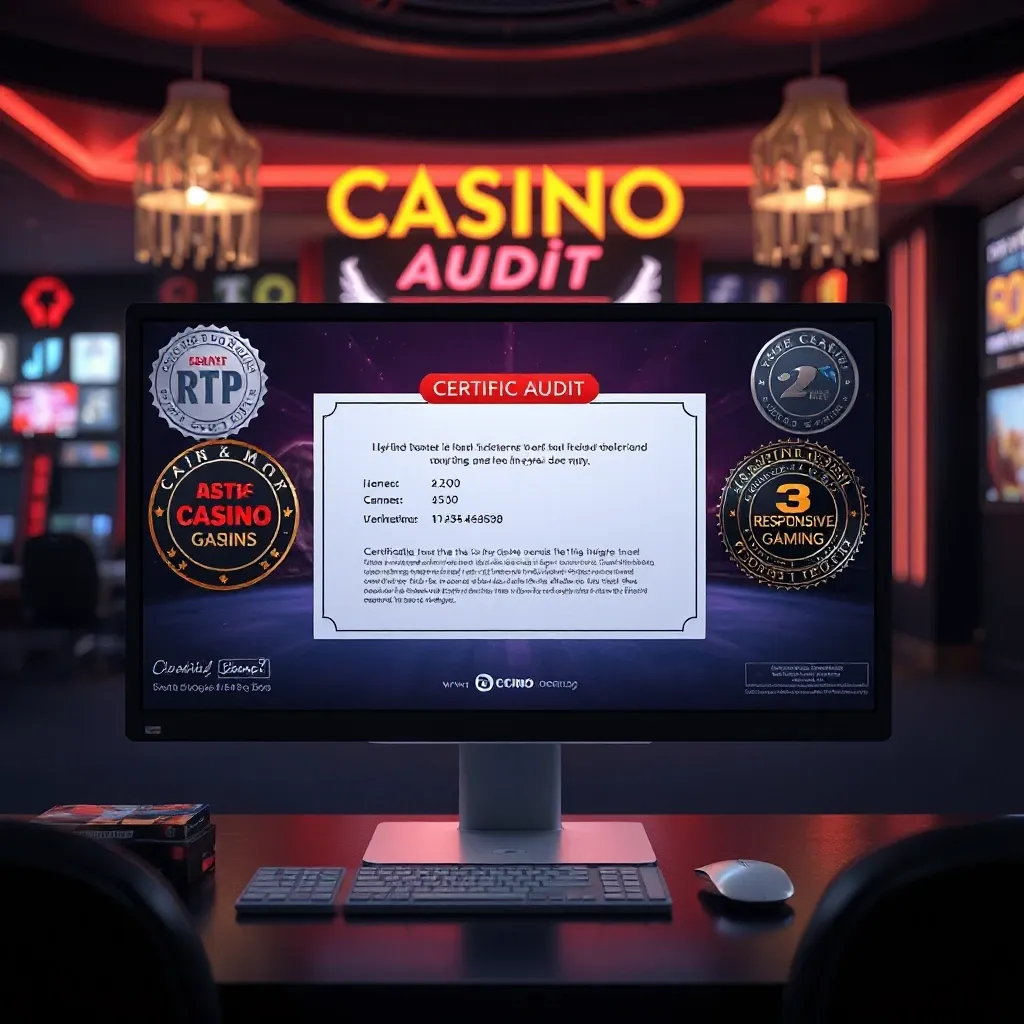
Identifying casinos with valid certifications is relatively straightforward. Reputable casinos will prominently display the logos of the auditing agencies, often with direct links to detailed audit reports. These reports offer insights into the testing methodologies and findings, enhancing transparency.
RTP, or Return to Player, is a pivotal concept for players. It represents the percentage of wagered money a game is statistically likely to return to players over an extended period. For instance, a game with a 96% RTP theoretically returns $96 for every $100 wagered. While this is a theoretical calculation, it provides players with a relative measure of a game’s potential payout rate. Independent audits verify these RTP claims, solidifying player trust.
Regulatory Oversight: Licensing and Compliance
The world of online casinos operates under a watchful eye. Regulatory bodies exist to ensure fairness, security, and responsible gaming practices. This oversight is primarily achieved through licensing and ongoing compliance monitoring. For an online casino, obtaining a license is a critical first step, signifying legitimacy and trustworthiness to potential players.
The licensing process can be rigorous. Reputable jurisdictions like the Malta Gaming Authority (MGA), the UK Gambling Commission (UKGC), and Curacao eGaming are known for their stringent requirements. To secure a license from one of these authorities, a casino operator must demonstrate financial stability, implement robust security protocols to protect player data, and prove the fairness of their games through independent testing. They also need to implement responsible gambling measures, offering tools and resources to help players manage their spending and prevent addiction.
But acquiring a license is not a one-time event. Regulatory bodies continuously monitor licensed casinos to ensure ongoing compliance. This includes regular audits, reviews of financial records, and assessments of security measures. Failure to comply with regulations can result in hefty fines, suspension of operations, or even outright license revocation. This constant scrutiny helps maintain a level playing field and protects players from unscrupulous operators.
Identifying Trustworthy Casinos
Finding a trustworthy casino online can feel like navigating a maze. With so many options available, distinguishing a legitimate platform from a potential scam requires careful due diligence. Empower yourself with the knowledge to assess casinos independently, focusing on key aspects that indicate fairness and security.
Begin by verifying the casino’s licensing. Reputable casinos operate under licenses from recognized regulatory bodies. This information is usually displayed prominently on the casino’s website, often in the footer. Don’t hesitate to cross-reference the license number with the regulator’s official database to confirm its validity.
Next, look for audit certifications. Independent auditing firms regularly assess casinos’ games and payout systems to ensure fairness. Seals of approval from these firms demonstrate a commitment to transparency. While casino reviews can offer insights, approach them with caution, as some may be biased. Seek out patterns in player feedback across multiple sources, paying attention to comments regarding payout speeds, customer support responsiveness, and overall user experience.
Finally, scrutinize the terms and conditions, especially those related to bonuses and payouts. Unfair casinos often hide predatory clauses within these documents. Pay close attention to wagering requirements, maximum withdrawal limits, and any conditions that seem overly restrictive. Be wary of excessively generous bonuses. While enticing, they can sometimes be a tactic employed by less reputable casinos to attract players before implementing unfair practices.
Advanced Technologies for Fairness
The online gambling world is constantly evolving, and with it, the technology aimed at ensuring fairness and transparency for players. Emerging technologies like blockchain and provably fair systems are leading the charge, offering the potential for a more trustworthy and equitable gambling experience.
Blockchain: A Foundation for Trustless Gaming
At its core, blockchain is a decentralized digital ledger that records transactions across many computers. This distributed nature makes it incredibly secure and resistant to tampering. In the context of online gambling, blockchain provides a transparent and immutable record of every bet, payout, and transaction. This means that players can independently verify the integrity of the game and ensure that the casino is operating honestly.
Provably Fair: Verifiable Randomness
One of the most exciting applications of blockchain in online gambling is the development of provably fair systems. These systems allow players to verify the fairness of each game outcome. Here’s how it generally works: before a game starts, the casino generates a secret “seed.” The player also provides their own seed. These seeds are combined using a cryptographic algorithm to determine the outcome of the game. After the game, the player can independently verify that the outcome was indeed determined by the combination of these seeds, ensuring that the casino couldn’t have manipulated the results in their favor. Both sides are checking each other’s seeds, before gambling or playing.
Transparency and Immutability: Key Benefits
The transparency and immutability offered by blockchain are game-changers for the online gambling industry. Players no longer have to rely solely on the casino’s word or the assurances of regulators. They can see for themselves that the games are fair and that the odds are what they are supposed to be. However, it’s important to note that provably fair systems are not yet universally adopted by all online casinos.
Decentralized Gambling: The Future?
With the rise of cryptocurrencies and blockchain technology, decentralized gambling platforms are gaining traction. These platforms operate without a central authority, eliminating the need for traditional intermediaries and potentially reducing fees. As these technologies become more mainstream, decentralized gambling could very well become the future of the industry, offering players greater control, transparency, and security. Whether this chaotic landscape will be the future of gambling is still to be seen, but with new technology being implemented constantly, chances are that the future is sooner than later.
Addressing Common Misconceptions
The world of online casinos is often shrouded in mystery, leading to several misconceptions, particularly regarding the fairness of games. One pervasive myth is that online casino games are universally rigged. While some unscrupulous operators may exist, the vast majority of licensed online casinos operate with integrity, adhering to strict regulations and employing sophisticated technology to ensure fairness.
A primary source of suspicion stems from the concept of the “house edge.” This refers to the statistical advantage the casino has in any given game. It’s important to understand that the house edge doesn’t mean games are rigged. It simply means that over a very long period, the casino is likely to make a profit. Individual players can absolutely win, and many do. Luck plays a significant role in the short term, allowing players to experience streaks of wins, even against the inherent house advantage.
At the heart of fair online casino gaming lies the Random Number Generator (RNG). This complex algorithm ensures that every game outcome is entirely random and unpredictable. Reputable online casinos undergo regular audits by independent testing agencies that verify the integrity of their RNGs. These audits are crucial for building player trust and maintaining a fair gaming environment. Additionally, strict regulations imposed by licensing jurisdictions further ensure transparency and prevent manipulation. These regulations often require casinos to publish payout percentages and adhere to responsible gambling practices.
The psychology of losing can also fuel accusations of unfairness. When faced with a series of losses, it’s easy to attribute it to external factors, such as rigged games, rather than accepting the inherent randomness of chance. Bad luck streaks are an inevitable part of gambling, and it is important to discern that as sometimes, variance can work against the player. It is imperative to avoid gambling when emotionally compromised, and always establish spending limits.
Responsible gambling is vital to a positive casino gaming experience. Establishing clear limits, understanding the risks involved, and recognizing when to stop are all key components of responsible play. Remember, casino games should be viewed as entertainment, not a source of income. By approaching online casinos with a clear understanding of the odds, rigorous regulations, and the importance of responsible gambling, players can enjoy the thrill of the game with confidence and minimize the risk of falling victim to these common, yet untrue, casino myths.
Conclusion
Navigating the world of online casinos can feel like traversing a minefield, but with the right knowledge, you can step confidently. The key takeaway here is simple: prioritize reputable and regulated online casinos. Your money, your time, and your peace of mind are all on the line.
Fair gambling isn’t just a buzzword; it’s the bedrock of a trustworthy online casino. Transparency in game mechanics, independently verified Random Number Generators (RNGs), and clear terms and conditions are your allies in ensuring a level playing field. Don’t settle for less. Demand to know how the games work and that the outcomes are genuinely random.
The allure of unregulated casinos might be strong with their tempting bonuses and seemingly lax rules. However, remember that these platforms often operate outside the bounds of established legal frameworks, which can result in unfair practices and put your funds at risk. The absence of regulatory oversight opens the door to potential manipulation and a lack of recourse if things go wrong.
Responsible gaming is not just the casino’s responsibility; it’s yours too. Set limits on your spending and playing time, and never chase losses. Online gambling is meant to be a source of entertainment, not a financial solution. If you find yourself struggling to control your gambling habits, seek help from responsible gaming resources.
Informed choices are your best defense. By understanding the importance of regulation, independent verification, and responsible gaming practices, you empower yourself to navigate the online casino landscape safely and enjoyably. Choose wisely, play responsibly, and let the games begin – fairly!